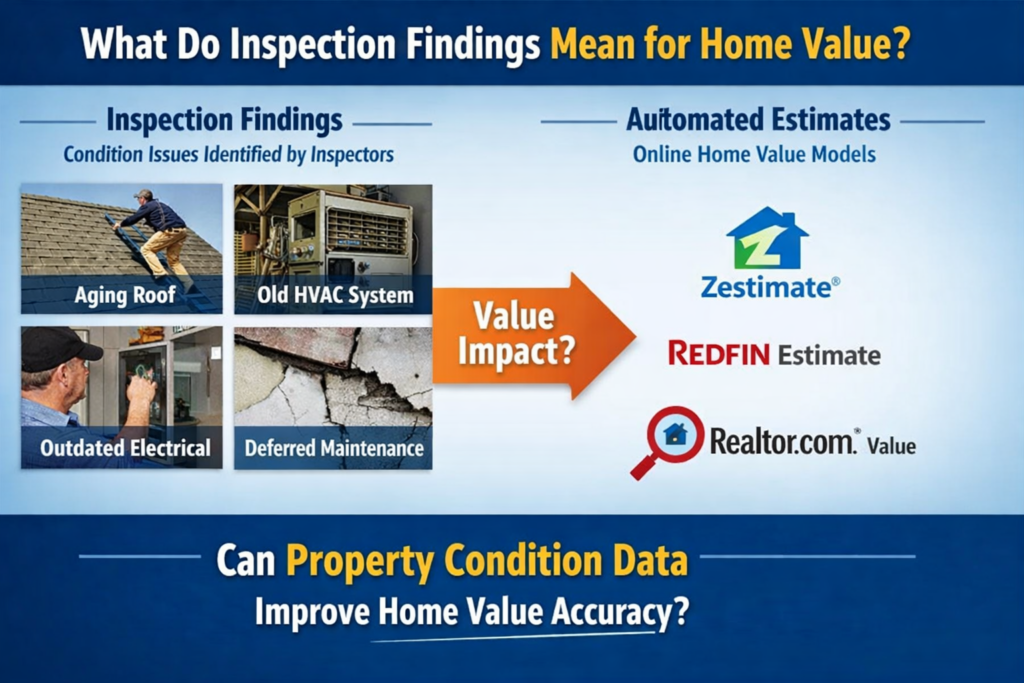
Home inspectors identify something that automated home valuation systems cannot easily see — property condition.
After more than 35 years as a residential appraiser, I’ve seen firsthand how property condition influences real estate value. Yet most automated home value estimates used by consumers today rely primarily on public records, comparable sales, and statistical modeling.
They typically do not know whether:
- the roof is nearing the end of its life
- HVAC systems have been replaced
- kitchens or bathrooms have been updated
- deferred maintenance exists
These are exactly the things home inspectors identify every day.
During inspections, buyers often ask a question that inspectors understandably avoid answering:
“What does this mean for the home’s value?”
Inspectors are careful not to provide valuation opinions, but the condition information they uncover can certainly influence buyer decisions and price negotiations.
Meanwhile, consumers frequently rely on automated value estimates from major real estate portals such as:
- Zillow
- Redfin
- Realtor.com
- Homes.com
These automated models provide a useful starting point, but they often cannot account for property condition unless the information exists in public records.
This creates an interesting gap.
Inspection findings reveal details about a property that automated valuation models often cannot detect.
That raises an interesting question:
Could inspection data help consumers better understand how property condition might influence automated home value estimates?
To explore this concept, I’ve been experimenting with tools that allow homeowners or buyers to input property condition information and see how those factors might influence automated valuations.
Examples include:
- AVMOptimizer.com
- HomeValueOptimizer.com
- HomeAgeUpdateGuide.com
These tools attempt to translate property condition and system age into a more transparent view of home value estimates.
Whether tools like this ultimately become widely adopted remains to be seen, but the idea highlights an important point:
Inspection findings provide valuable information about a property that automated models often cannot see.
As automated valuation technology continues to evolve, the role of real-world property condition data may become increasingly important in helping consumers better understand home values.